
Population in township
In the late 19th century, the population of the borough of Leeds has increased every year due to immigration. Leeds Corporation Tramways provided several routes connecting the city centre and destinations including Cross Gates, Chapel Allerton, Moortown, Roundhay, Middleton, Beeston, Armley, Hunslet, and Kirkstall. The network with certain parts on reserved track was significantly larger than the Leeds Supertram system designed in the 1990s.
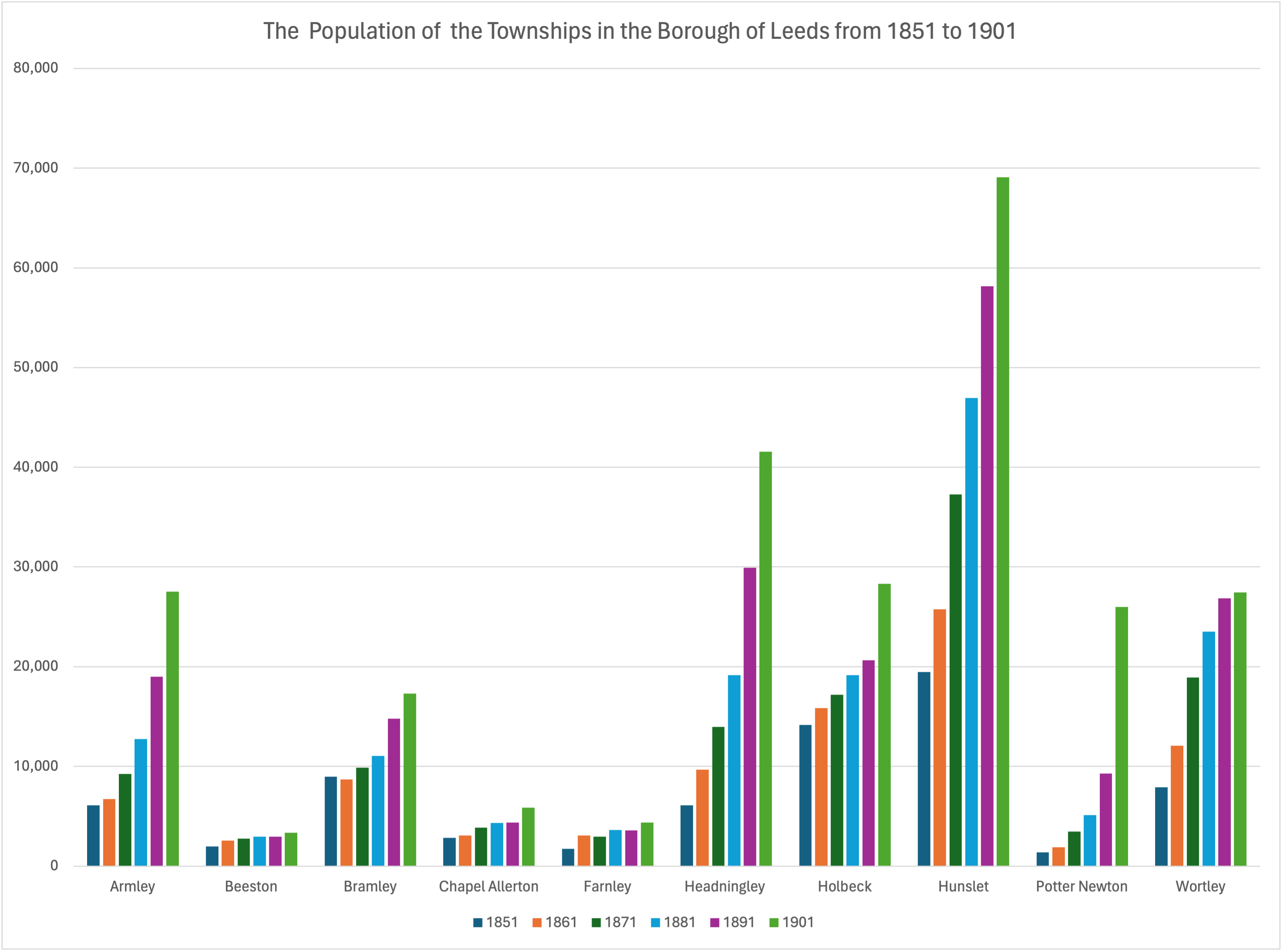
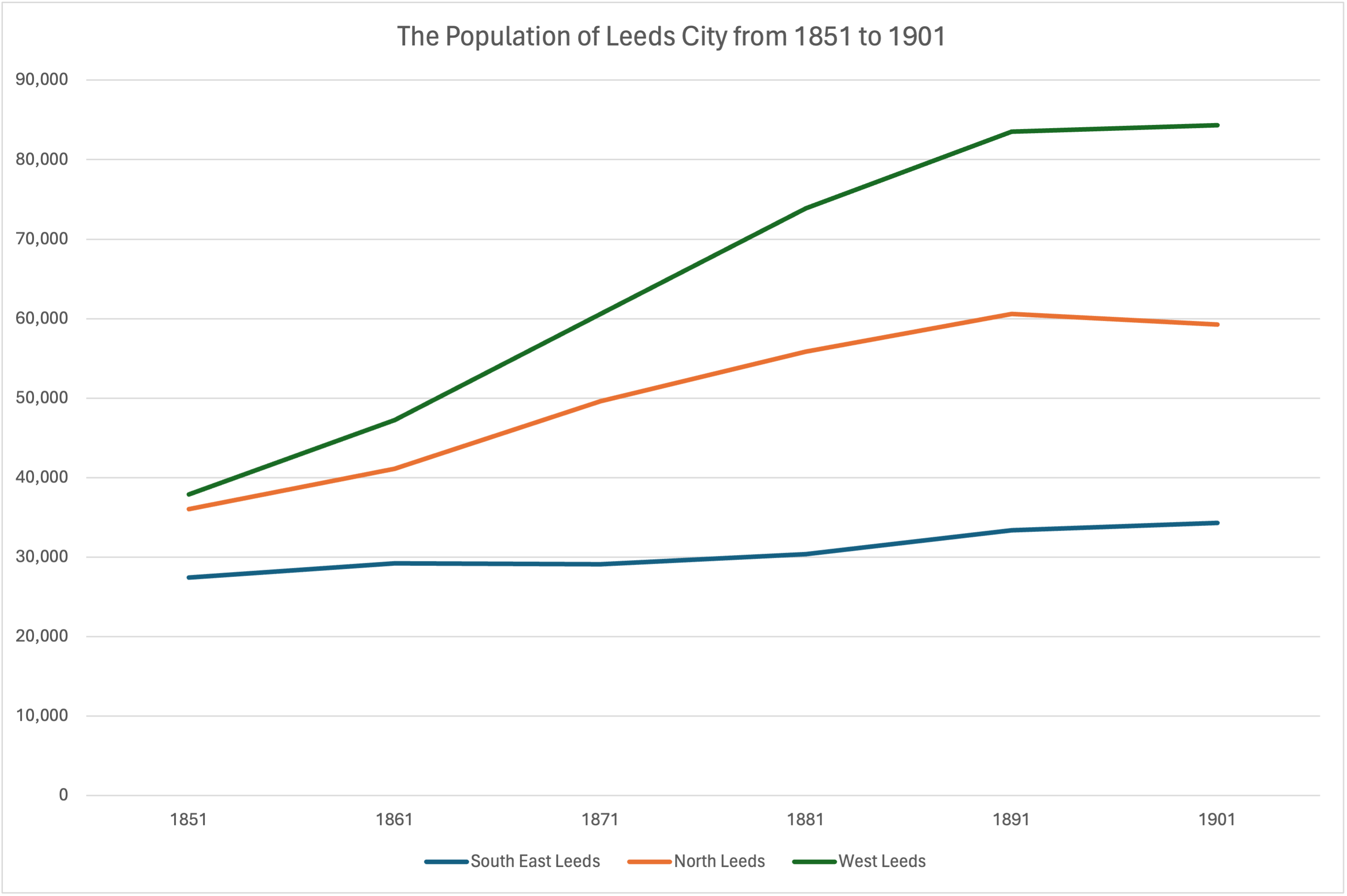
In the late 1950s and early 60s, Leeds was expanding its boundaries, with extensive slum clearance areas around the city centre and an increase in suburban residentials. The city council replaced the tramway with other public transit including the expanded bus service to adapt to citizens' transportation needs.
Leeds city centre is important in driving the economy of this region. One-third of job opportunities in Leeds are located in the city centre. In addition, the Leeds shopping centre ranks fifth in the country in terms of retail space. Leeds city centre holds two universities and the Leeds General Infirmary. The city centre is also the cultural and entertainment centre, with a variety of theatres, museums, cinemas, restaurants and bars. Public transit to Leeds city centre has potential to influence the economy of the city. Inadequate transportation infrastructure may obstacle access to employment opportunities, especially those in the city centre, which impedes the growth of employment and development of Leeds. Thus, it highlights the importance of a strong transportation system in maintaining the economic vitality of a city.
Emissions
Domestic transport was the largest emitting sector in the UK in 2022, responsible for over a quarter of emissions.
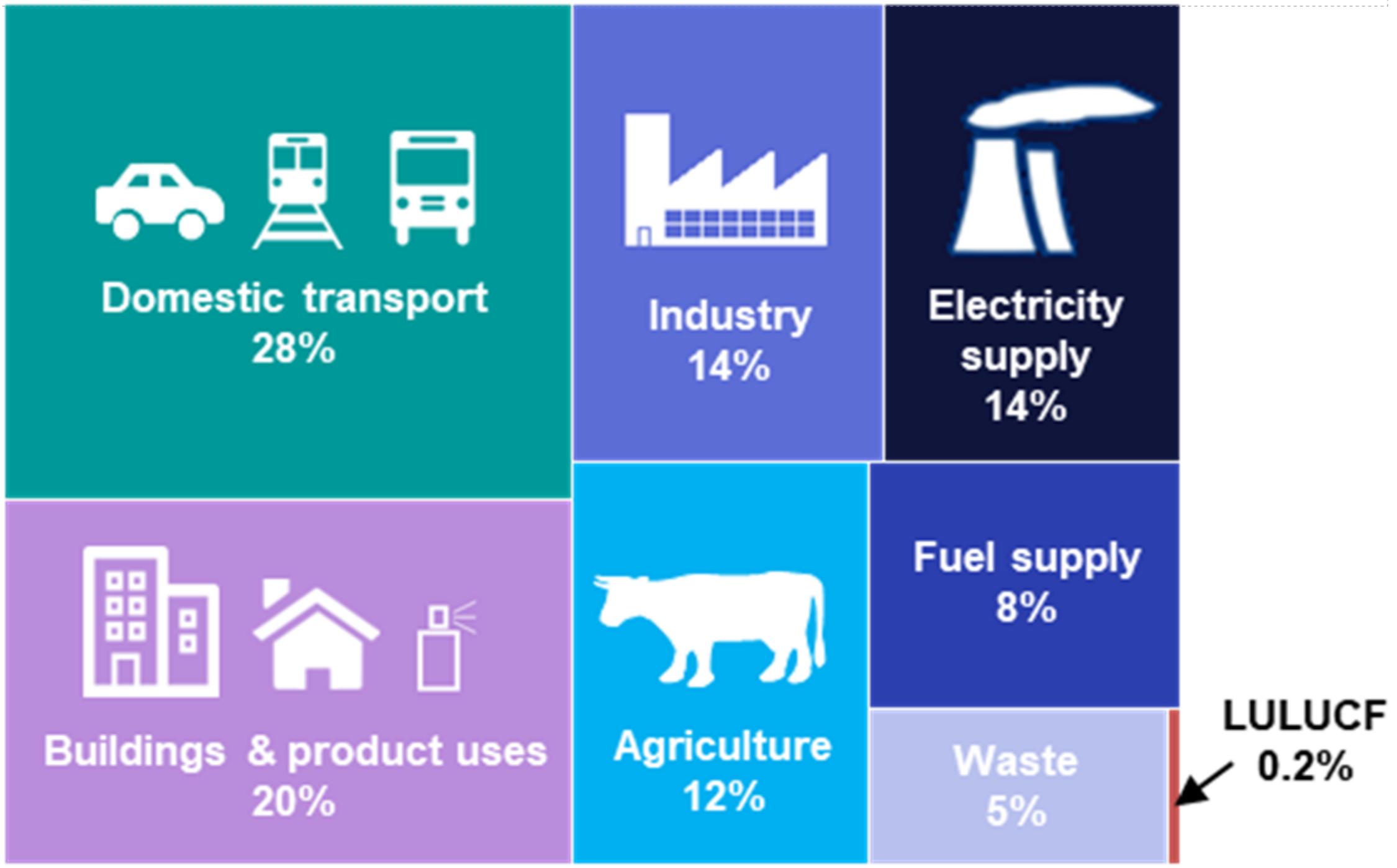
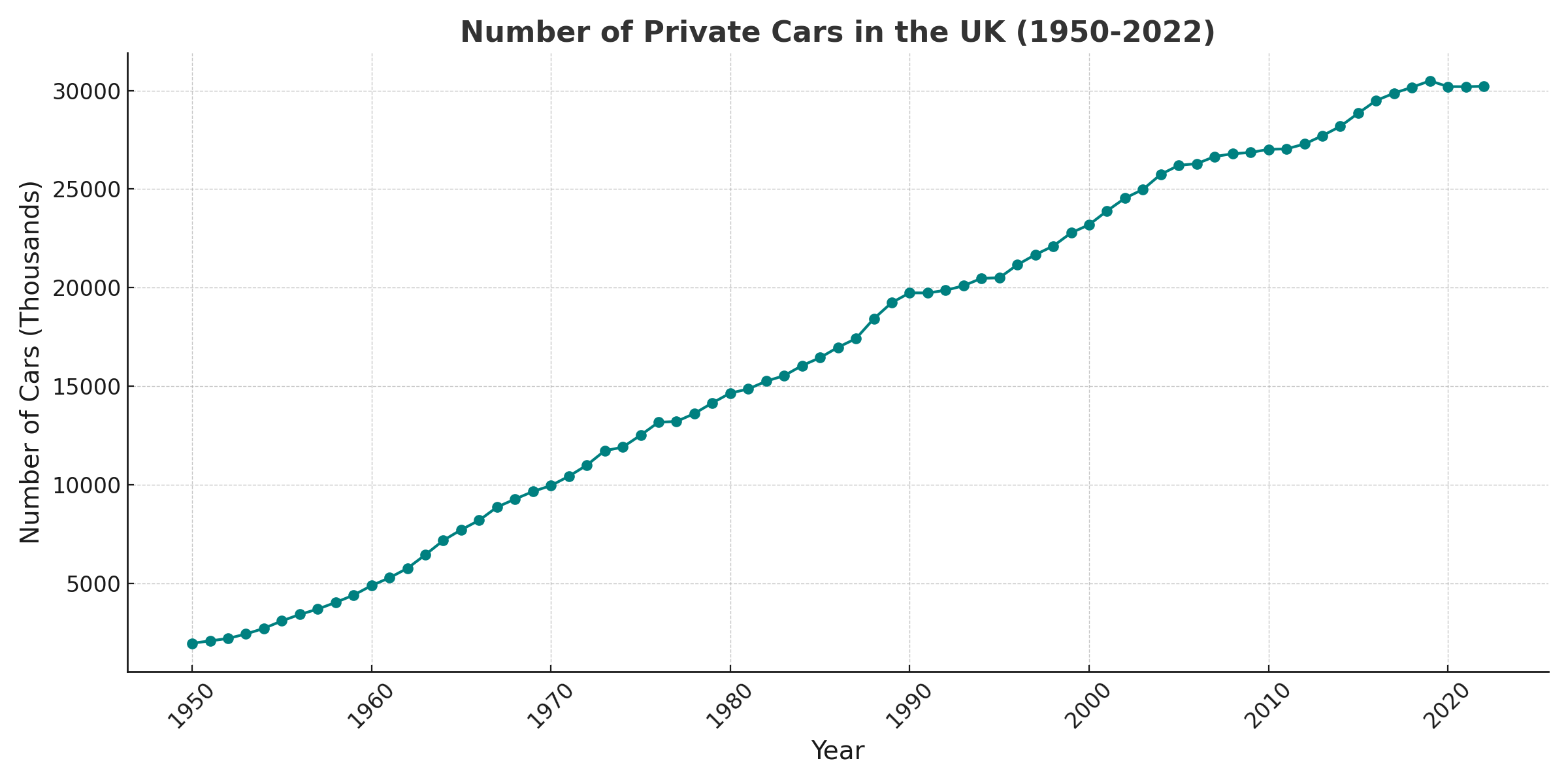
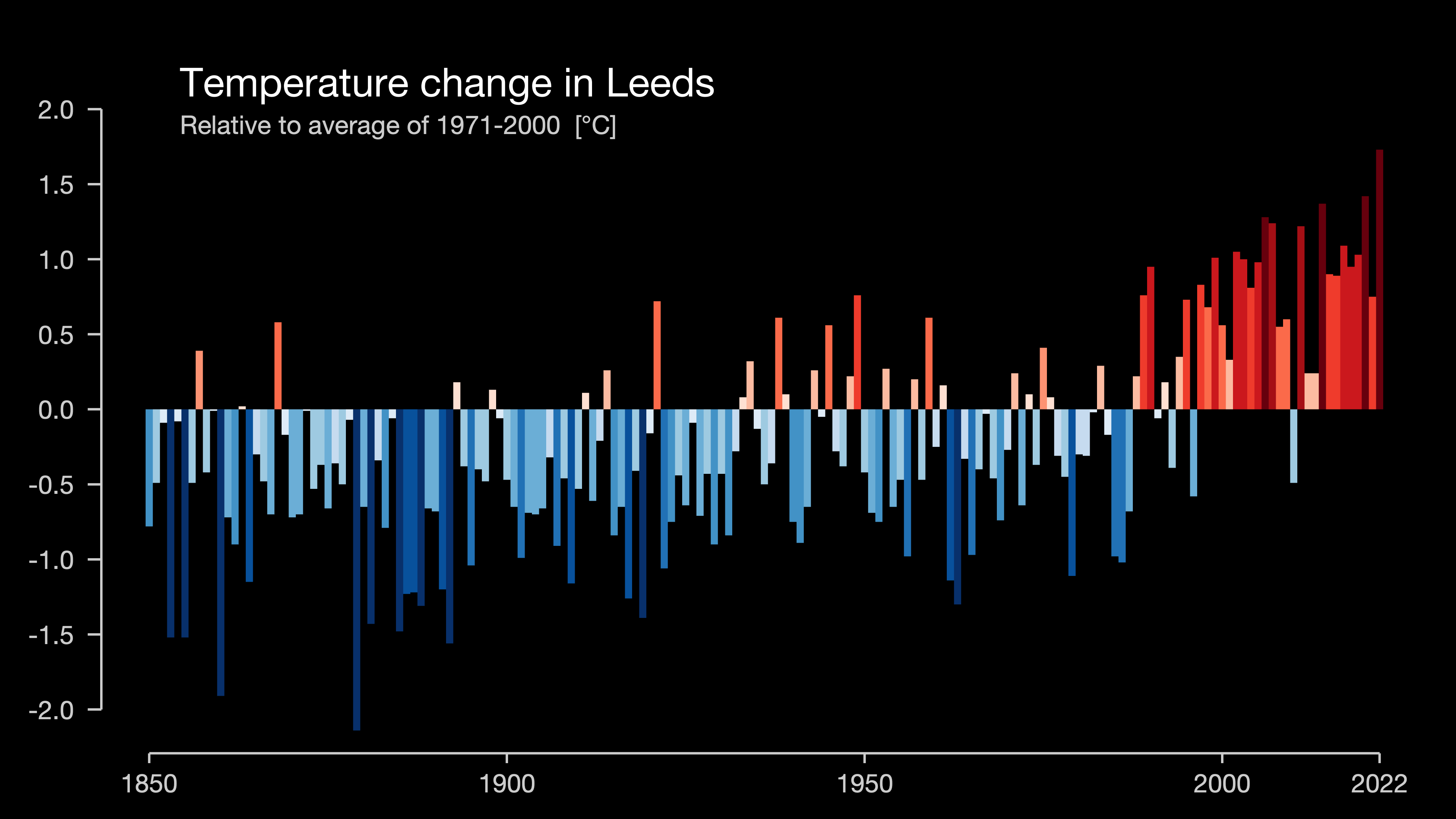
From the 1900s to the 2010s, there has been a gradual increase in the number of private cars owned in the UK, and by extension Leeds has followed this trend as a whole. The reason for this trend in Leeds is most likely due to the disappearance of the tram. The temperature graph shows that the colours are getting darker and darker, which means that greenhouse gases are increasing in Leeds, and transport accounts for 28% of the UK's highest emissions in 2022, which means that the increase in the number of private cars is the main cause of greenhouse gases, and therefore the disappearance of trams indirectly contributes to the local environmental impact in Leeds.